Can Low Iron Cause Hair Loss?
Low iron is one of the most common reasons women notice extra shedding. Holistic Hair Studio in Alexandria VA explains the link and the blood test to ask your doctor about.

More hair on your brush, a thinner ponytail, a part that looks wider than it used to. When women in Alexandria tell us their hair is thinning, one of the first things we suggest is a conversation with their doctor about iron. In this hair health update from Holistic Hair Studio, we look at why iron matters so much to your hair.
Why Your Hair Needs Iron
Iron helps your red blood cells carry oxygen around your body. It is also needed by cells that divide quickly, and the cells at the base of each hair follicle are some of the fastest dividing cells you have.
When iron runs low, the body protects vital organs first. Hair is not essential to survival, so it is one of the first places to feel the shortage. More hairs move out of the growing phase and into the resting phase, and a few months later they shed. Doctors call this telogen effluvium.
Ferritin, the Number to Ask About
A standard blood count checks for anemia, which is when your red blood cells are already affected. But you can run low on iron long before you become anemic. Ferritin is a protein that stores iron, and the ferritin level in your blood shows how full your iron reserves are.
A 2022 review in the journal Skin Appendage Disorders combined 36 studies with more than 10,000 participants. Women with hair loss had lower ferritin levels than women without it, and low iron stores were especially common in women who had not yet reached menopause. The reviewers concluded that women with thinning hair may benefit from higher ferritin levels. If you are noticing extra shedding, ask your doctor whether your ferritin has been checked, not only your blood count.
Who Is Most at Risk
Women with heavy periods. Monthly blood loss is the most common reason women of childbearing age run low on iron.
People who eat little or no meat. Iron from plants is absorbed less easily than iron from meat and fish, so it takes more planning.
Regular blood donors. Every unit of whole blood you donate takes about 200 to 250 milligrams of iron with it, and it can take months for your stores to recover. The American Red Cross encourages frequent donors to think about their iron intake.
Endurance athletes. Runners and other athletes who train hard can lose iron through sweat and through the gut, and many runners along the Mount Vernon Trail train through the winter.
Do Not Guess With Iron Pills
It can be tempting to buy an iron supplement and hope for the best. Please do not. Too much iron can be harmful, and some people have hemochromatosis, an inherited condition in which the body stores too much iron. Accidental overdose of iron tablets was once a leading cause of poisoning deaths in young children in the US, which is why iron products carry a warning label. Always keep them out of reach. Let a blood test guide you, and follow your doctor's advice on dose and timing.
Eating for Healthy Hair
Include iron rich foods such as lentils, beans, tofu, leafy greens, pumpkin seeds, eggs, fish and lean meat.
Pair plant sources of iron with vitamin C, such as peppers, citrus fruit or tomatoes, to help your body absorb it.
Drink tea and coffee between meals rather than with them, as they can reduce iron absorption.
Eat enough protein, which your hair is built from.
Supporting Thinning Hair in Alexandria
While your iron levels recover, gentle care helps protect the hair you have. Our Purifying Scalp Treatment, $135, uses OWAY organic and biodynamic formulas to calm and clean the scalp, and our Deep Conditioning Treatment, from $45, strengthens the lengths. A well shaped haircut can also make thinning hair look fuller. Haircuts start at $67 for short hair, $92 for medium and $117 for long.
Clients visit our Powhatan Street studio from Old Town North, Del Ray, Potomac Yard and Arlington. We are always glad to talk through what you are noticing and when it might be time to see your doctor.
Thyroid problems can cause similar shedding. Read how your thyroid can affect your hair.
Your Iron and Hair Checklist
Ask your doctor to check your ferritin as well as your blood count
Eat iron rich foods with a source of vitamin C
Keep tea and coffee away from mealtimes
Never take iron supplements without testing first
Book a Purifying Scalp Treatment at Holistic Hair Studio in Alexandria
Book your appointment today and experience the transformative power of natural organic hair wellness at Holistic Hair Studio!
1433 Powhatan Street, Alexandria, VA 22314
Book your appointment: 703-473-6864
You might also like to read these articles:
Can Your Thyroid Affect Your Hair?
The Three Vitamins That Actually Work for Hair Growth The Rest Is Just Marketing
What Your Hair Remembers
Every strand of hair is a timeline of the months it took to grow. Holistic Hair Studio in Alexandria VA explains what scientists can read in a single strand.

Your hair is not only something you style. It is also a record. As each strand grows, it locks in traces of what was circulating in your blood at the time, and it holds them long after they have left the rest of your body. In this hair health update from Holistic Hair Studio in Alexandria, we look at what a single strand can reveal.
A Timeline You Wear Every Day
Scalp hair grows at roughly half an inch, or about one centimeter, a month. The hair nearest your scalp formed in the last few weeks. The hair at your shoulders may have formed a year or more ago. Once a section of hair has grown out, it does not change much from the inside, so it works like a timeline read from the root to the tip.
That is why hair is so useful to scientists. Blood and urine show what is in your body over hours or days. Hair can show what was there months ago.
Reading Stress in a Strand
Cortisol is the hormone your body releases in response to stress. Researchers have found that cortisol is laid down in growing hair, and by cutting a strand into short sections they can estimate how stress levels changed month by month. Studies have used hair cortisol to look at stress in shift workers, students during exams, people with chronic illness and pregnant women. It is a research tool rather than a routine test, but it shows how closely your hair reflects your life.
The Composer's Hair
One of the most striking hair studies of recent years involved Ludwig van Beethoven. Locks of his hair were kept by friends and admirers after his death in 1827. In 2024, researchers reported in the journal Clinical Chemistry that locks of his hair, tested at the Mayo Clinic, contained lead at 64 to 95 times the level found in hair today. Arsenic and mercury were also raised.
Lead poisoning would not have killed him on its own, but it may have contributed to his long illnesses. Possible sources include lead glazed drinking vessels and the cheap wine of the period, which was sometimes sweetened with lead acetate.
Napoleon's hair tells a similar story about the past. In 2008, Italian researchers found arsenic levels around 100 times higher than in people today. Samples from his childhood in Corsica held about as much as samples from his final days in exile, which suggested everyday environmental exposure rather than poisoning. Hair from people living two centuries ago, it turns out, routinely carried a toxic load that would alarm a doctor now.
What Your Hair Cannot Tell You
Hair testing is powerful in the laboratory, but it has limits for everyday health. Hair mineral analysis kits sold online are not considered reliable for diagnosing nutrient deficiencies, and results can vary from one lab to another for the same sample. Hair dye, bleach, swimming pools and styling products can also change what is measured. If you are worried about your health, a blood test ordered by your doctor is a far better guide.
Caring for Your Hair in Alexandria
Because the hair on your head records months of your life, it also carries months of wear. Sun, heat styling, hard water, chlorine and friction all leave their mark on the lengths, and that damage cannot be reversed from the inside. Regular trims remove the oldest, most worn hair, and gentle care protects the newer hair growing behind it.
For many of our Alexandria clients, that wear includes summer sun on the waterfront, chlorine from neighborhood pools and mineral buildup from hard water.
Our Deep Conditioning Treatment, from $45, uses OWAY organic masks to strengthen and soften the lengths, and our Detox Treatment, $42, helps clear mineral and product buildup. Haircuts start at $67 for short hair, $92 for medium and $117 for long.
Clients visit our Powhatan Street studio from Old Town North, Del Ray, Potomac Yard and Arlington. We would love to help you look after the newest chapter of your hair's story.
To understand the timeline better, read how fast hair really grows.
Your Hair Timeline Checklist
Remember the ends of long hair may be several years old
Trim regularly to remove the most worn hair
Protect new growth from heat and harsh products
Ask your doctor for blood tests rather than relying on hair kits
Book a Detox Treatment at Holistic Hair Studio in Alexandria
Book your appointment today and experience the transformative power of natural organic hair wellness at Holistic Hair Studio!
1433 Powhatan Street, Alexandria, VA 22314
Book your appointment: 703-473-6864
You might also like to read these articles:
How Fast Does Hair Really Grow?
Why You Have a Cowlick
That stubborn tuft that will not lie flat has a scientific explanation. Holistic Hair Studio in Alexandria VA explains hair whorls and how a good cut works with them.
Almost everyone has one. A tuft at the crown that sticks up no matter what you do, or a section at the front that pushes your bangs sideways. You wet it, flatten it and spray it, and by lunchtime it is back. In this hair health update from Holistic Hair Studio in Alexandria, we look at why cowlicks exist and why fighting one is a battle you will usually lose.
What a Cowlick Really Is
A cowlick is a section of hair that grows in a different direction from the hair around it. The name comes from the swirl a cow's tongue leaves when it licks a calf's coat. Most cowlicks sit at a hair whorl, the point on the crown where your hair grows outward in a spiral.
Hair does not grow straight out of the scalp. Each follicle sits in the skin at an angle, and the follicles in one area all lean the same way. Where those directions meet and turn, you get a whorl. The angle is set in the follicle itself, so no amount of water or product can change the direction a hair grows. You can only work with it.
Your Whorl Was Set Before You Were Born
Hair follicles form while a baby is still in the womb, and the whorl pattern is fixed long before birth. Most people have a single whorl near the crown that turns clockwise. One study of American newborns found clockwise whorls in 94 percent of babies. Double whorls are much less common, with estimates ranging from about 1.5 to 5 percent of people depending on the group studied.
Genes play a part. In 2023, researchers reported in the Journal of Investigative Dermatology that they had identified four regions of human DNA linked to whorl direction, after studying more than 4,000 people. The picture is not simple, though. Identical twins sometimes have whorls that turn opposite ways.
No, It Is Not the Coriolis Effect
There is a popular myth that the spin of the Earth decides which way your hair whorl turns, just as people claim it decides which way water drains from a sink. It does not. The force created by the Earth's rotation is far too weak to affect anything as small as a sink, let alone a hair follicle growing in the womb. The direction of your whorl comes from biology, not geography.
What a Hair Whorl Can Tell a Doctor
Because the scalp and the brain underneath it develop at the same time before birth, doctors have long paid attention to unusual hair patterns in newborns. Several whorls, or a whorl in an unexpected place, are seen more often in some conditions that affect early brain development. A single unusual whorl on its own is almost always harmless, but it is one of the small details pediatricians may note during an examination.
Weather plays a part too. Summers in Alexandria are humid, and hair absorbs moisture from the air, which can make a cowlick even harder to control from June to September.
How to Live With Your Cowlick
Tell your stylist where your cowlicks are, and let them see your hair dry.
Leave a little more length or weight over a cowlick so it lies down rather than springs up.
Blow dry the section against its natural direction first, then back the way it grows.
Use a light hold product while hair is damp rather than a heavy one when it is dry.
Choose a part that follows your natural growth instead of fighting it.
Haircuts in Alexandria That Work With Your Hair
A good haircut starts with how your hair actually grows. Our stylists look at your growth patterns before they cut, so your hair falls into place on its own. Haircuts start at $67 for short hair, $92 for medium and $117 for long, each with a consultation, an OWAY organic shampoo and a finished style. Our Child's Cut is $52, so younger clients with a stubborn crown can start early too.
Clients visit our Powhatan Street studio from Old Town North, Del Ray, Potomac Yard and Arlington. Bring us your most stubborn cowlick and we will show you how to make it behave.
For more on keeping your cut in shape, read how often you should get a haircut.
Your Cowlick Checklist
Find where your whorls and cowlicks sit
Show your stylist your hair dry before the cut
Keep a little extra length over a cowlick
Style with the direction of growth, not against it
Book a haircut at Holistic Hair Studio in Alexandria
Book your appointment today and experience the transformative power of natural organic hair wellness at Holistic Hair Studio!
1433 Powhatan Street, Alexandria, VA 22314
Book your appointment: 703-473-6864
You might also like to read these articles:
How Often Should You Get a Haircut?
Does Rosemary Oil Really Grow Hair?
Rosemary oil is the most talked about hair growth remedy online. Holistic Hair Studio in Alexandria VA looks at the one study behind the trend and how to use it safely.
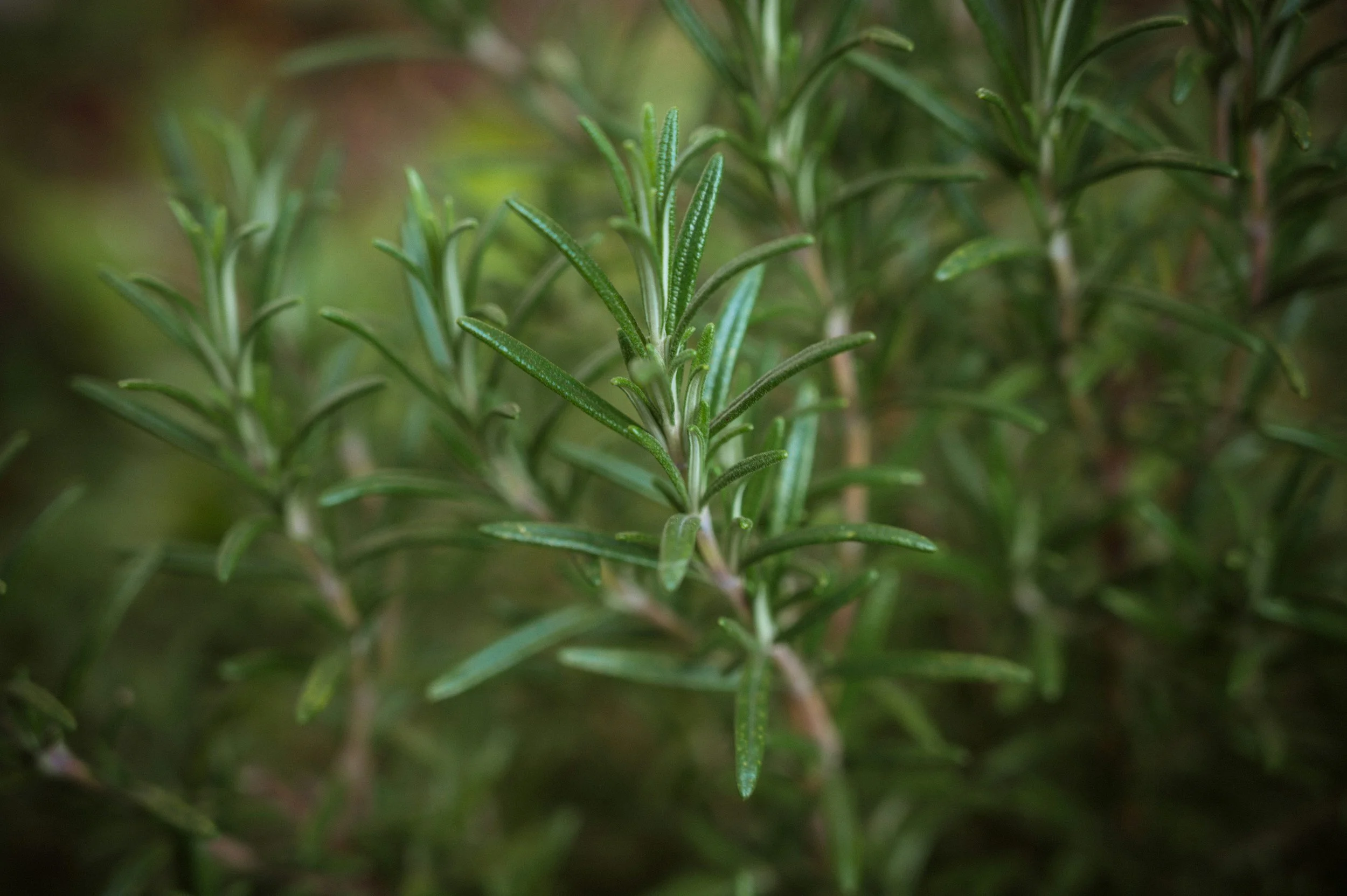
If you have scrolled through social media in the last few years, you have almost certainly seen it. Someone massages rosemary oil into their scalp, and a few months later they show off thicker hair. Bottles sell out, and several of our clients in Alexandria have asked us if it works. In this hair health update from Holistic Hair Studio, we look at the evidence behind the trend.
The Study Behind the Claims
Almost every rosemary oil claim online traces back to one study. In 2015, researchers in Iran published a trial in the journal Skinmed. They took 100 people with androgenetic alopecia, the common pattern hair loss that runs in families, and split them into two groups of 50. One group used rosemary oil on the scalp and the other used minoxidil 2 percent, a standard hair loss treatment.
After three months, neither group showed a meaningful change. After six months, both groups had a significant increase in hair count, and there was no significant difference between them. Scalp itching was a side effect in both groups but was more common with minoxidil.
What the Headlines Leave Out
The study is interesting, but it has limits. There was no group using a plain oil or no treatment, so it cannot show how much of the change came from the rosemary itself. It compared rosemary with the 2 percent strength of minoxidil, not the stronger 5 percent version many people now use. It was small, and it has not yet been confirmed by larger trials in people. Some laboratory and animal studies suggest rosemary may help, but those results do not always carry over to human scalps.
Rosemary oil may turn out to be useful. For now, the honest answer is that the evidence is promising but thin.
The Blood Pressure Pill That Grew Hair
The treatment rosemary was compared with has an unusual history of its own. Minoxidil was first developed as a tablet to treat severe high blood pressure. Doctors soon noticed an unexpected side effect. Patients taking it were growing extra hair, sometimes on their faces, backs and arms. Researchers turned that side effect into a lotion for the scalp, and the US Food and Drug Administration approved topical minoxidil for hair loss in 1988. One of the best known hair growth treatments in the world began as an accident.
You will find rosemary oil in pharmacies and health food stores across Alexandria, often in small bottles of pure essential oil. Check the label. If it says 100 percent essential oil, it needs diluting before it touches your scalp.
How to Use Rosemary Oil Safely
Rosemary essential oil is highly concentrated and should never be applied neat to your skin. If you want to try it, follow these steps.
Mix a few drops into a carrier oil such as jojoba or sweet almond oil.
Test a small amount on the inside of your arm and wait a day to check for a reaction.
Massage it gently into the scalp and leave it for a few hours or overnight.
Wash it out thoroughly so it does not build up and clog the scalp.
Keep it away from your eyes and stop if your scalp becomes red, itchy or sore.
Give it at least six months before you judge the result.
If you are losing hair suddenly, in patches, or in large amounts, see your doctor or a dermatologist first. Hair loss can have medical causes that no oil will fix.
Scalp Care in Alexandria Before You Try Rosemary
Whatever you put on your scalp works best when the scalp is clean and balanced. Our Purifying Scalp Treatment, $135, clears buildup and calms the skin with OWAY organic and biodynamic formulas, and it is available with a professional blow dry and style from $210. For a lighter reset, our Detox Treatment, $42, can be added to any service.
Clients visit our Powhatan Street studio from Old Town North, Del Ray, Potomac Yard and Arlington. We are happy to talk through any home remedy you are curious about.
For another popular hair growth promise, read does biotin really help your hair.
Your Rosemary Oil Checklist
Always dilute rosemary essential oil in a carrier oil
Patch test before you use it on your scalp
Wash it out well to avoid buildup
See a doctor about sudden or patchy hair loss
Book a Purifying Scalp Treatment at Holistic Hair Studio in Alexandria
Book your appointment today and experience the transformative power of natural organic hair wellness at Holistic Hair Studio!
1433 Powhatan Street, Alexandria, VA 22314
Book your appointment: 703-473-6864
You might also like to read these articles:
Does Biotin Really Help Your Hair?
The Three Vitamins That Actually Work for Hair Growth The Rest Is Just Marketing
Can Your Thyroid Affect Your Hair?
Thinning hair can be one of the first signs of a thyroid problem. Holistic Hair Studio in Alexandria VA explains the link, the signs to look for and when to see your doctor.

Your thyroid is a small, butterfly shaped gland at the front of your neck. Most people never think about it until something goes wrong. Yet the hormones it makes help set the pace for almost every cell in your body, including the ones that grow your hair. Some of our clients in Alexandria first notice a thyroid problem in the shower drain. In this hair health update from Holistic Hair Studio, we look at the connection.
How the Thyroid Controls Hair Growth
Every hair on your head goes through a cycle. It grows for several years, rests for a few months and then falls out so a new hair can replace it. At any one time, most of your hairs are in the growing phase.
Thyroid hormones help regulate that cycle. When there is too little or too much of them, more hairs can move into the resting phase at the same time. A few months later those hairs fall out together. This is why thyroid related hair loss is usually spread evenly across the whole scalp rather than appearing as a bald patch.
Underactive and Overactive Thyroid
Hypothyroidism. An underactive thyroid is far more common, especially in women. Hair can become thinner, dry, coarse and brittle. Other common signs include tiredness, feeling cold, weight gain, constipation and dry skin.
Hyperthyroidism. An overactive thyroid can also cause thinning, but the hair often becomes very fine and soft. Other signs include weight loss, a fast heartbeat, anxiety, shaking hands and feeling hot.
Autoimmune thyroid conditions, such as Hashimoto's disease and Graves' disease, are also linked to alopecia areata, a separate condition that causes round patches of hair loss.
The Eyebrow Clue
Doctors have long noticed one unusual sign of an underactive thyroid. The outer third of the eyebrows can thin or disappear, while the inner part stays full. It is not a reliable test on its own, because brows also thin with age and with years of plucking, but it is worth mentioning to your doctor if it appears alongside other symptoms.
The Belt of Swollen Necks
A century ago, thyroid problems were so common in parts of the United States that the Great Lakes region and the Northwest were known as the goiter belt. The soil there contained very little iodine, which the thyroid needs to make its hormones, and many people developed visibly swollen necks. In 1924, iodized salt went on sale in Michigan, and within a few years goiter rates dropped sharply. It remains one of the most successful public health measures in American history. Today iodine deficiency is uncommon in the US, and taking extra iodine or kelp supplements without medical advice can upset the thyroid rather than help it.
The Good News About Regrowth
Thyroid related hair loss is usually temporary. Once your hormone levels are back in balance with treatment, the growth cycle tends to settle down. Because hair grows slowly, it often takes several months before you see a difference, and some people notice extra shedding for a short time after starting medication while the body adjusts.
If you are losing more hair than usual, see your doctor. A simple blood test can check your thyroid function, and your doctor can look for other common causes such as low iron at the same time.
If you live in Alexandria, your primary care doctor can order a thyroid test, and an endocrinologist can help if the results point to something that needs specialist care.
Gentle Hair Care in Alexandria While Your Thyroid Settles
While your body recovers, gentle care helps protect the hair you have. Our Purifying Scalp Treatment, $135, clears buildup and calms the scalp using OWAY organic and biodynamic formulas. Our stylists can also suggest a cut that makes thinner hair look fuller. Haircuts start at $67 for short hair, $92 for medium and $117 for long.
Clients visit our Powhatan Street studio from Old Town North, Del Ray, Potomac Yard and Arlington. We are always glad to talk through what you are noticing and when it might be time to see your doctor.
Shedding can also follow a stressful season. Read about the stress shedding cycle.
Your Thyroid and Hair Checklist
Notice even thinning across the whole scalp
Look for other signs such as tiredness, feeling cold or a fast heartbeat
Ask your doctor for a thyroid blood test
Avoid iodine and kelp supplements unless your doctor advises them
Book a Purifying Scalp Treatment at Holistic Hair Studio in Alexandria
Book your appointment today and experience the transformative power of natural organic hair wellness at Holistic Hair Studio!
1433 Powhatan Street, Alexandria, VA 22314
Book your appointment: 703-473-6864
You might also like to read these articles:
Why Wet Hair Breaks So Easily
Your hair is at its most fragile just after you wash it. Holistic Hair Studio in Alexandria VA explains why wet hair breaks and how to protect it after every shower.
You step out of the shower, wrap your hair in a towel, rub it hard and then drag a brush through the knots. It feels like the most ordinary part of your day. It is also the moment when your hair is most likely to snap. In this hair health update from Holistic Hair Studio in Alexandria, we explain why wet hair is so fragile and how to handle it.
What Water Does to a Strand of Hair
Hair is made mostly of a protein called keratin. Inside each strand, the keratin chains are held in shape by several kinds of chemical bonds. The strongest are disulfide bonds, which only chemical treatments such as perms and relaxers can break. Far more numerous are hydrogen bonds, which are weak and easily broken by water.
When hair gets wet, water moves into the strand and breaks many of those hydrogen bonds. The hair becomes softer, stretchier and weaker. That is also why you can reshape hair when it is wet, and why a style set while damp holds once the hair dries and the hydrogen bonds form again in their new position.
Your Hair Gets Wider, Not Longer
Here is a surprising fact. When hair soaks up water, it swells far more in width than in length. Researchers measuring human hair have found that a strand grows about 14 percent wider when it is fully wet, but only about 2 percent longer. As the strand swells, the overlapping cuticle cells on the outside are pushed upward. A lifted cuticle catches on neighboring strands, which is why wet hair tangles so readily and why brushing it can tear the cuticle away.
Water quality can add to the problem. Tap water in parts of Northern Virginia, including Alexandria, can be moderately hard, and the minerals it leaves on wet hair make a lifted cuticle feel rougher still.
The Habits That Do the Most Damage
Rubbing with a towel. Rough cotton towels drag across a swollen, lifted cuticle and cause frizz and breakage.
Brushing from the roots. Pulling a brush from scalp to ends pushes every small knot down into one larger knot, which then snaps.
Tying wet hair back. Wet hair stretches under tension and can break at the elastic, especially around the hairline.
Sleeping on wet hair. Hours of pressure and friction on wet strands lead to tangles and broken ends by morning.
High heat straight away. Putting a flat iron or very hot dryer on soaking hair heats the water trapped inside the strand. Blow drying from a distance on a lower heat setting is far gentler.
How to Handle Wet Hair Safely
Squeeze water out with your hands before you leave the shower.
Blot and press with a microfiber towel or a soft cotton T shirt instead of rubbing.
Apply conditioner and use your fingers or a wide tooth comb to detangle while the conditioner is still in.
Start detangling at the ends and work up toward the roots in small sections.
Let hair air dry partly before you blow dry, and keep the dryer moving.
Wait until hair is dry before you tie it up or go to bed.
Help From Our Alexandria Studio
Conditioned hair has a smoother, flatter cuticle, so it slides apart instead of tangling. Our Deep Conditioning Treatment, from $45, uses OWAY organic masks to soften and strengthen the lengths, and you can pair it with a professional blow dry and style for $120. Our Wash and Blowout starts at $75, and our stylists are always happy to show you how to dry your hair at home without damage.
Clients visit our Powhatan Street studio from Old Town North, Del Ray, Potomac Yard and Arlington. If your ends are snapping, a fresh haircut removes the damage so it does not travel further up the strand.
For more on the knots that form after washing, read why your hair tangles the second you step out of the shower.
Your Wet Hair Checklist
Blot, do not rub
Detangle with conditioner in, ends first
Use a wide tooth comb or your fingers
Let hair dry before tying it up or sleeping
Book a Deep Conditioning Treatment at Holistic Hair Studio in Alexandria
Book your appointment today and experience the transformative power of natural organic hair wellness at Holistic Hair Studio!
1433 Powhatan Street, Alexandria, VA 22314
Book your appointment: 703-473-6864
You might also like to read these articles:
Why Your Hair Tangles the Second You Step Out of the Shower
Do Silk Pillowcases Really Help Your Hair?
Silk pillowcases promise smoother hair by morning. Holistic Hair Studio in Alexandria VA looks at what the evidence actually shows and what helps your hair most overnight.
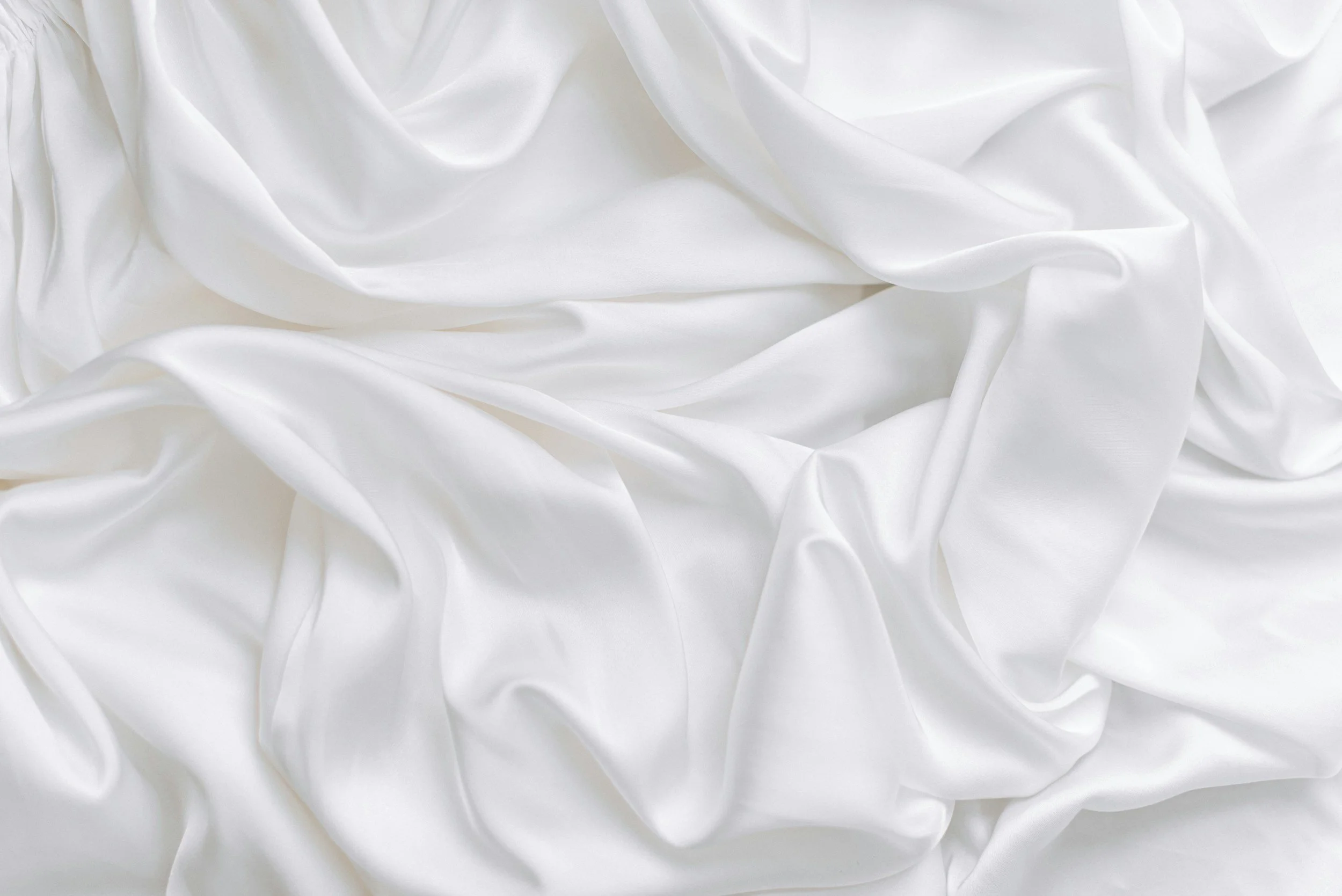
You spend roughly a third of your life with your head on a pillow, turning over again and again through the night. So it makes sense that the fabric under your hair might matter. Silk pillowcases promise smoother hair by morning, and clients across Alexandria often ask us whether they are worth it. In this hair health update from Holistic Hair Studio, we look at what is known and what is mostly marketing.
What Happens to Your Hair Overnight
Most people change position many times during the night. Each time you move, your hair rubs against the pillowcase. Hair is protected by an outer layer of overlapping cells called the cuticle, which lies flat like roof tiles when hair is healthy. Repeated rubbing lifts and chips those cells. Once the cuticle is roughed up, strands catch on one another, tangle more easily and look dull and frizzy.
Cotton is the most common pillowcase fabric in American homes. Its fibers are short and twisted together, so the surface has a slightly rough texture. Silk is made from a long continuous protein filament, which gives a smoother surface with less drag.
This matters most in winter. Once the heating comes on in Alexandria homes, indoor air dries out and hair loses moisture faster, so a rough pillowcase has even more to work against.
What the Evidence Says
Here is the honest answer. There are almost no independent clinical studies testing whether silk pillowcases reduce hair breakage. Most of the testing you see quoted online was paid for by companies that sell silk. Dermatologists who recommend silk usually do so because the reasoning is sound, not because a trial has proved it.
The reasoning goes like this. A smoother surface means less friction, and less friction means less wear on the cuticle. Cotton also absorbs more moisture than silk, so it may draw some of the natural oils and leave in products away from your hair as you sleep. People with curly, fine, color treated or fragile hair are the most likely to notice a difference, because their cuticles are already more easily lifted.
The Thread Behind the Fabric
Silk has an unusual origin that most people never think about. Each silk cocoon is spun by a single caterpillar from one continuous thread, and that thread can measure several hundred meters. To unwind it in one piece, producers usually heat the cocoon with the pupa still inside, which kills it before it can break out as a moth. A single pillowcase takes a great many cocoons. If that troubles you, satin made from smooth synthetic fibers offers a similar slippery surface, and it is easier to wash.
What Matters More Than the Fabric
A pillowcase will not undo damage that happens during the day, and it cannot repair hair that is already broken. These habits make a bigger difference to how your hair looks in the morning.
Never go to bed with wet hair. Hair is at its weakest when wet, and it will be pressed and twisted for hours.
Brush gently before bed to remove tangles before they tighten.
Use a loose braid or a soft scrunchie for long hair, never a tight elastic.
Keep heavy oils and styling products off the pillow area if you have a sensitive scalp or skin.
Wash your pillowcase every week, whatever it is made of.
How to Choose a Silk Pillowcase
If you decide to try silk, look for pillowcases labeled 100 percent mulberry silk. Momme is the unit used to describe the weight of silk fabric, and a weight of around 19 to 25 momme tends to last longer than thinner silk. Wash it on a delicate cycle in cool water with a gentle detergent and let it air dry.
Overnight Hair Care in Alexandria
The healthier your hair is when you go to bed, the better it copes with eight hours on a pillow. Our Deep Conditioning Treatment, from $45, uses OWAY organic masks to smooth and strengthen the lengths, and a regular haircut removes the split ends that catch and tangle. Haircuts start at $67 for short hair, $92 for medium and $117 for long, each with a consultation, an OWAY organic shampoo and a finished style.
Clients visit our Powhatan Street studio from Old Town North, Del Ray, Potomac Yard and Arlington. Ask us at your next visit and we will show you the best way to put your hair up for the night.
If you wake up with knots, read why your hair tangles overnight.
Your Overnight Hair Checklist
Go to bed with dry hair
Brush out tangles before you sleep
Choose a smooth pillowcase in silk or satin
Tie long hair loosely, never tightly
Book a Deep Conditioning Treatment at Holistic Hair Studio in Alexandria
Book your appointment today and experience the transformative power of natural organic hair wellness at Holistic Hair Studio!
1433 Powhatan Street, Alexandria, VA 22314
Book your appointment: 703-473-6864
You might also like to read these articles:
Why Your Hair Tangles Overnight
Does Biotin Really Help Your Hair?
Biotin is in almost every hair supplement on the shelf. Here is what the evidence really shows and the FDA warning every biotin user should know about.

Walk into any pharmacy on King Street or Mount Vernon Avenue and you will find a shelf of hair, skin and nail supplements. Almost every one of them contains biotin, often in large amounts. Many of our clients in Alexandria tell us they take it. In this month's hair health update from Holistic Hair Studio, we look at what the evidence really says.
What Biotin Is
Biotin is vitamin B7. Your body uses it to help turn food into energy, and it plays a part in producing keratin, the protein that makes up most of your hair. It is found in eggs, nuts, seeds, sweet potatoes, legumes and whole grains, and bacteria in your gut also produce some.
Adults need about 30 micrograms a day. Most people get that easily from a normal diet.
When Biotin Helps
True biotin deficiency is rare. When it does occur, it can cause thinning hair, a red scaly rash around the eyes, nose and mouth, and brittle nails. It can be linked to some inherited conditions, long term use of certain medications, very high alcohol intake and regularly eating large amounts of raw egg white, which contains a protein that binds biotin. Pregnancy can also lower biotin levels.
In people who are genuinely deficient, biotin can make a real difference.
When It Does Not
For people who are not deficient, there is little good evidence that extra biotin improves hair growth or thickness. A 2017 review in the Journal of Drugs in Dermatology looked for published cases where biotin had improved hair or nails. The researchers found 18, and every one of those patients had an underlying condition or deficiency. They found no strong evidence that biotin helps healthy people.
That has not slowed sales. Hair supplements commonly contain 5,000 to 10,000 micrograms of biotin per dose, and some contain far more. That can be hundreds of times the daily amount your body needs.
The Warning on the Bottle Nobody Reads
This is the part of the biotin story most people never hear. Many laboratory blood tests use biotin as part of the chemistry that makes them work. High levels of biotin in the blood can interfere with those tests and produce results that are falsely high or falsely low.
In 2017 the US Food and Drug Administration issued a safety communication warning about this, and it repeated the warning in 2019. The FDA reported that it had received a report of a patient who died after biotin interference caused a falsely low result on a troponin test, a test doctors use to help diagnose a heart attack. Thyroid tests are among the others that can be affected, and a distorted result can lead to the wrong diagnosis or treatment.
If you take biotin, tell your doctor before any blood test. Your doctor may advise you to stop taking it for a period beforehand.
What Actually Supports Healthy Hair
For most people, healthy hair starts with an everyday diet that includes enough protein, iron, zinc and vitamin D, along with good sleep and stress management. If you are losing more hair than usual, the best first step is a visit to your doctor, who can check for deficiencies such as low iron or thyroid problems. A supplement chosen without testing may simply hide the real cause.
What you do to the hair you already have matters just as much. A gentle shampoo, low heat and regular trims protect the hair that is growing from your scalp right now.
Healthy Hair Care at Holistic Hair Studio
We cannot change what happens inside your follicles, but we can help you look after every strand they produce. Our Scalp Purifying Treatment, $135, clears buildup so the scalp is in good condition, and our Deep Conditioning Treatment, from $45, uses OWAY masks to strengthen and soften the lengths. All of our care, treatment and styling products come from OWAY, an organic and biodynamic line, and our color line is formulated without ammonia, PPD, resorcinol or parabens.
Clients visit our Powhatan Street studio from Old Town North, Del Ray, Potomac Yard and Arlington. We are always glad to talk through what is happening with your hair and when it might be time to see your doctor.
For more on the nutrients that make a difference, read the three vitamins that actually work for hair growth.
Your Biotin Checklist
Eat a varied diet with eggs, nuts, seeds and legumes
Ask your doctor to check for deficiencies before you buy supplements
Tell your doctor about biotin before any blood test
Protect the hair you have with gentle care
Book a Scalp Purifying Treatment at Holistic Hair Studio in Alexandria
Book your appointment today and experience the transformative power of natural organic hair wellness at Holistic Hair Studio!
1433 Powhatan Street, Alexandria, VA 22314
Book your appointment: 703-473-6864
You might also like to read these articles:
The Three Vitamins That Actually Work for Hair Growth The Rest Is Just Marketing
Can a Ponytail Cause Hair Loss?
Your everyday ponytail may be pulling harder than you think. Here is how tight hairstyles cause hair loss, the early signs to look for and how to wear your hair up safely.

It is the easiest hairstyle there is. You pull your hair back for a run along the Potomac, a long day at the office or a morning on the Metro, and you do not think about it again until you take it down and feel that ache at the back of your head. In this month's hair health update from Holistic Hair Studio in Alexandria, we explain what a tight ponytail can do to your hair over time.
What Traction Alopecia Is
Traction alopecia is hair loss caused by repeated pulling on the hair follicle. When a hairstyle holds the same hairs under tension day after day, the follicles become inflamed and begin to produce thinner, weaker hairs. In time they can stop producing hair altogether.
It is caused by how hair is worn, not by genetics, and it can affect anyone. Tight ponytails, high buns, braids, extensions, heavy clips and even tightly secured headbands can all contribute. It is seen often in ballet dancers and in other people whose work requires hair to be pulled back firmly every day.
Your Hairline Takes the Strain
Traction loss usually appears where the pull is greatest. For a ponytail, that tends to be the temples, the edges of the hairline and around the ears. For a bun worn in the same place every day, it can be the crown.
Dermatologists have even described a recognizable pattern. In many people with traction alopecia, a fine row of short hairs survives right along the front edge of the hairline while the hair just behind it thins. This is known as the fringe sign, and it can help a doctor tell traction loss apart from other types of hair loss.
A Headache With an Official Name
The ache you feel when you take your hair down is real enough to be listed in the International Classification of Headache Disorders, the reference system doctors use around the world. External traction headache, formerly known as ponytail headache, is caused by sustained pulling on the scalp and usually eases within an hour of the tension being released. It is a useful warning that your style is pulling harder than your scalp wants.
Early Signs to Look For
Tenderness, soreness or itching where your hair is pulled back
Small bumps around the follicles at the hairline
Short broken hairs at the temples or nape
A hairline that looks wider or further back than it used to
Visible scalp where a part or bun usually sits
The Good News
Caught early, traction alopecia can often be reversed. If the pulling stops before the follicles are scarred, hair usually regrows over the following months. If tension continues for years, the damage can become permanent. That is why it is worth changing habits as soon as you notice any of the signs above. If thinning has already appeared, see a dermatologist for a diagnosis.
How to Wear Your Hair Up Safely
Wear your ponytail lower and looser.
Change where you place it from day to day so the same hairs are not always under strain.
Use soft scrunchies, spiral ties or claw clips instead of tight elastics with metal joins.
Take your hair down as soon as you get home, and never sleep in a tight style.
Avoid pulling hair back when it is wet, as wet hair stretches and breaks more easily.
Give extensions and tight braids regular breaks.
Healthier Hair Habits at Holistic Hair Studio
A great haircut can reduce the need to pull your hair back at all. Our stylists will shape a cut that falls well and dries easily, so you can wear it down more often. Haircuts start at $67 for short hair, $92 for medium and $117 for long, each with a consultation, an OWAY organic shampoo and a finished style. If your hairline is feeling tender or thin, our Scalp Purifying Treatment, $135, can help calm the scalp.
Clients visit our Powhatan Street studio from Old Town North, Del Ray, Potomac Yard and Arlington. Ask us at your next visit and we will show you a few easy ways to wear your hair up without the strain.
If you have also noticed extra shedding, read about the stress shedding cycle.
Your Healthy Hairline Checklist
Wear ponytails lower and looser
Move your part and your bun from day to day
Choose soft ties and clips over tight elastics
Take your hair down at night
Book a haircut at Holistic Hair Studio in Alexandria
Book your appointment today and experience the transformative power of natural organic hair wellness at Holistic Hair Studio!
1433 Powhatan Street, Alexandria, VA 22314
Book your appointment: 703-473-6864
You might also like to read these articles:
The Stress Shedding Cycle Alexandria Women Are Ignoring
Your Scalp Has Its Own Microbiome
Your scalp is home to its own community of bacteria and fungi. Here is what they do, how they are linked to dandruff and how to keep them in balance.
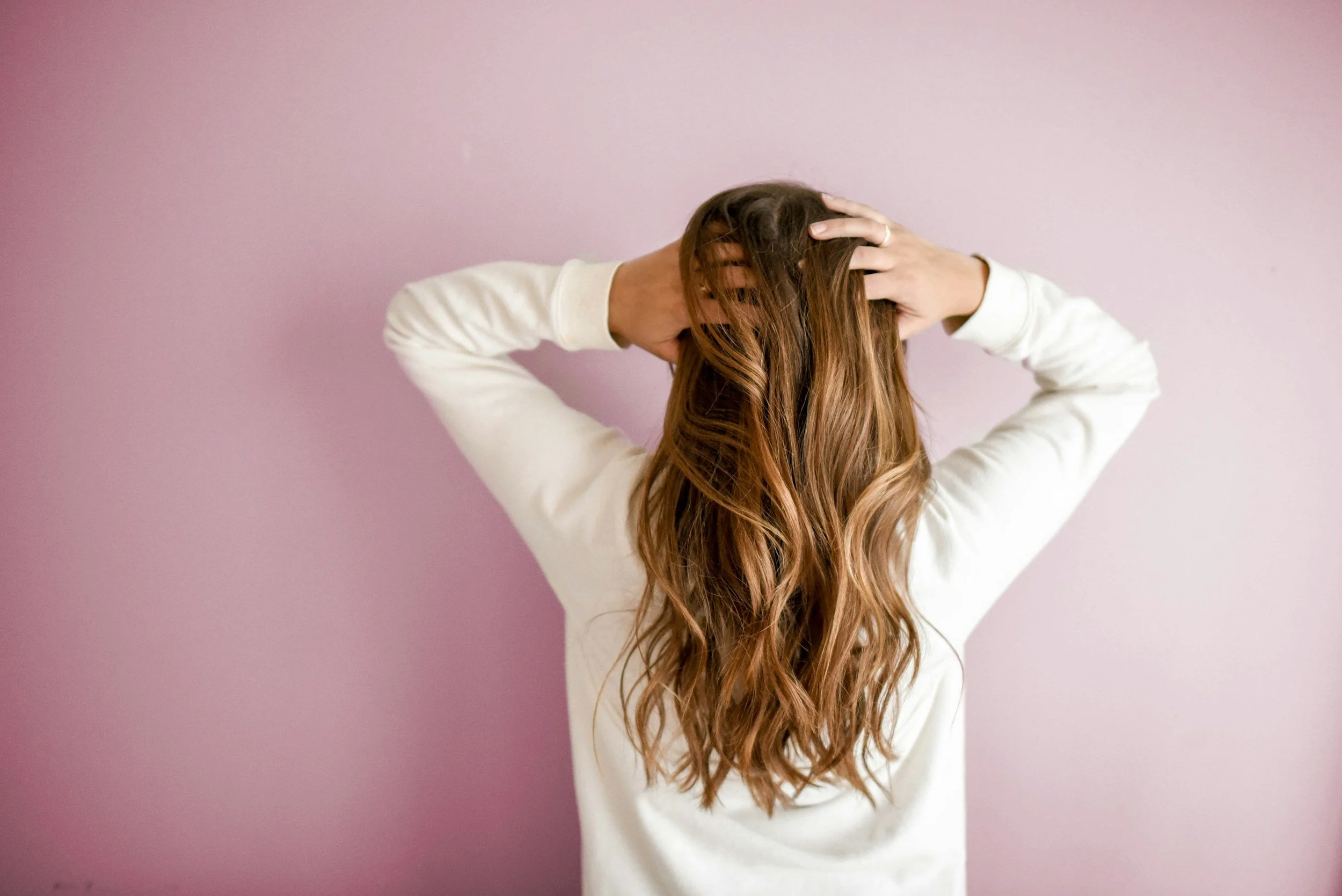
You wash your hair, you rinse it well, and you assume your scalp is clean. In fact it is never empty. It is home to a living community of bacteria and fungi, and that community has a great deal to do with whether your scalp feels calm or itchy. In this month's hair health update from Holistic Hair Studio in Alexandria, we look at the science of the scalp microbiome.
Who Lives on Your Scalp
Your scalp has more oil glands than almost anywhere else on your body, and that oil, called sebum, creates a rich environment for microbes. Studies of healthy scalps consistently find a small number of dominant residents.
Cutibacterium. Formerly known as Propionibacterium, these bacteria live in oily areas of skin and feed on sebum.
Staphylococcus. Several species of this bacteria live on healthy skin, most commonly Staphylococcus epidermidis.
Malassezia. This yeast is the main fungus on the scalp. It cannot make the fats it needs to survive, so it lives on yours.
In a balanced scalp, these organisms coexist and help protect the skin from less welcome visitors.
Dandruff Is Not Dry Skin
One of the most common misunderstandings we hear from clients across Del Ray and Old Town North is that dandruff means a dry scalp. It is usually the opposite. Dandruff is closely linked to oil and to the microbes that feed on it.
Malassezia breaks down the fats in sebum and releases fatty acids, including oleic acid. In people whose skin is sensitive to them, these fatty acids irritate the scalp and speed up the turnover of skin cells. The result is visible flakes and itch. Dandruff is extremely common, and estimates suggest it affects around half of adults at some point.
The Bacteria Matter Too
For years, Malassezia took most of the blame. A 2016 study of 59 adults published in Scientific Reports found that the balance of bacteria was even more closely linked to dandruff. Dandruff scalps had fewer Cutibacterium and more Staphylococcus than healthy scalps, and the levels of Malassezia did not track the severity of the flakes.
The researchers concluded that dandruff appears to depend on how the whole community and the scalp interact, not on a single microbe. That is why harsh treatments that strip everything away often bring short relief followed by a return of the problem.
What Upsets the Balance
Several everyday habits can disturb the scalp community.
Harsh sulfate shampoos. Strong detergents strip sebum quickly, and the scalp can respond by producing more.
Product buildup. Dry shampoo, heavy styling products and silicones leave a film that traps oil and dead skin.
Infrequent washing. Leaving oil on the scalp for too long gives Malassezia more to feed on.
Winter heating. Dry indoor air in Alexandria homes and offices can leave the skin barrier more reactive.
Hard water. Mineral deposits can sit on the scalp and make it harder to rinse products away.
How to Care for Your Scalp Microbiome
Wash with a gentle, sulfate free shampoo, such as the OWAY range we use in the studio.
Wash often enough to keep oil from building up. For many people that means every two to three days.
Massage the scalp with your fingertips when you shampoo, rather than scratching with your nails.
Rinse thoroughly, especially after using conditioner or masks.
Use dry shampoo sparingly and never for days in a row.
See a dermatologist if flaking is severe, painful or spreads beyond the scalp.
Scalp Care at Holistic Hair Studio
Our Scalp Purifying Treatment, $135, is designed to clear buildup, calm the skin and restore balance using OWAY organic and biodynamic formulas. It is available with a professional blow dry and style from $210. For a lighter reset, our Detox Treatment, $42, can be added to any service.
Because we use products without harsh sulfates and our studio is a fragrance free environment, it is a comfortable place for clients with sensitive or reactive scalps. Clients visit our Powhatan Street studio from Old Town North, Del Ray, Potomac Yard and Arlington.
If your scalp gets worse when the heating comes on, read why your scalp itches more in winter.
Your Healthy Scalp Checklist
Choose a gentle, sulfate free shampoo
Wash often enough to stop oil building up
Keep dry shampoo for occasional use
Massage, do not scratch
Book a Scalp Purifying Treatment at Holistic Hair Studio in Alexandria
Book your appointment today and experience the transformative power of natural organic hair wellness at Holistic Hair Studio!
1433 Powhatan Street, Alexandria, VA 22314
Book your appointment: 703-473-6864
You might also like to read these articles:
Scalp SOS: How to Soothe an Itchy Scalp and Prevent Dandruff
How Fast Does Hair Really Grow?
Waiting for your hair to grow can feel endless. Here is how fast hair really grows, why it stops at a certain length and how to keep the length you have.

You walked out of the salon with a fresh cut in the spring, and by the time the leaves fell along Mount Vernon Avenue you were sure your hair had hardly moved. In this month's hair health update from Holistic Hair Studio in Alexandria, we answer one of the questions we hear most often in the chair. How fast does hair really grow?
The answer is slower than most people hope, and that is exactly why protecting the length you already have matters so much.
The Real Number
Scalp hair grows on average about half an inch a month, which works out at roughly six inches a year. The rate varies from person to person and is influenced by genetics, age, hormones, nutrition and overall health. Hair tends to grow a little faster in younger adults, and growth slows with age.
You have around 100,000 hair follicles on your scalp, and each one works on its own schedule. That is why you never shed all your hair at once.
The Three Stages of Every Hair
Every follicle moves through a repeating cycle.
Growth. The anagen phase lasts from about two to seven years. At any moment, around 85 to 90 percent of the hairs on your head are in this stage.
Transition. The catagen phase lasts around two to three weeks. The follicle shrinks and the hair detaches from its blood supply.
Rest and shedding. The telogen phase lasts around three months. At the end of it, the old hair falls out and a new one begins to grow in its place. Losing around 50 to 100 hairs a day is normal.
Why Your Hair Stops at a Certain Length
The length of your growth phase sets the longest your hair can reach. Someone with a two year growth phase may find their hair stalls around shoulder length, while someone with a seven year phase can grow it to their waist. This is largely inherited. No shampoo can change it.
What most people experience as hair that will not grow is usually hair that is breaking at the ends as fast as it grows at the root.
Your Ends Are Older Than You Think
Here is a fact that surprises many of our clients. If your hair reaches just past your shoulders, the strands at the ends may be two years old or more. They have lived through two Alexandria summers, two winters of indoor heating, hundreds of washes and countless passes of a brush.
Because hair records what it has been exposed to as it grows, scientists can read it like a timeline. In 2008, Italian physicists tested locks of Napoleon's hair taken at different points in his life and found high levels of arsenic in all of them, as well as in samples from his son and his wife Josephine. That pointed to everyday exposure in the era rather than murder in exile.
Your hair keeps a record too, of every hot tool, harsh dye and sunny afternoon on the Mount Vernon Trail. That is why the oldest part of your hair always needs the most care.
Does Cutting Hair Make It Grow Faster?
No. Growth happens at the follicle, under the scalp, and trimming the ends has no effect on it. What a regular trim does is remove split ends before they travel up the strand. Left alone, a split can keep splitting, and you end up losing far more length than a small trim would have taken.
How to Keep the Length You Grow
Detangle gently from the ends upward with a wide tooth comb.
Keep hot tools on a low to moderate setting.
Swap tight elastics for soft scrunchies or clips.
Sleep on a silk or satin pillowcase.
Eat enough protein, as hair is made mostly of a protein called keratin.
Book a trim every 8 to 12 weeks if you are growing your hair.
Growing Healthy Hair at Holistic Hair Studio
Our precision haircuts start at $67 for short hair, $92 for medium and $117 for long, and every cut includes a consultation, an OWAY organic shampoo and a finished style. If you are growing your hair, tell us, and we will take only what is needed to keep the ends strong. A Deep Conditioning Treatment, from $45, helps protect older ends through the dry winter months.
Clients visit our Powhatan Street studio from Old Town North, Del Ray, Potomac Yard and Arlington. We are always happy to talk through realistic goals for your hair.
For more on timing your appointments, read how often you should get a haircut.
Your Hair Growth Checklist
Expect around half an inch of growth a month
Treat your ends as the oldest, most fragile hair you have
Trim every 8 to 12 weeks to stop splits traveling
Keep heat low and elastics soft
Book a haircut at Holistic Hair Studio in Alexandria
Book your appointment today and experience the transformative power of natural organic hair wellness at Holistic Hair Studio!
1433 Powhatan Street, Alexandria, VA 22314
Book your appointment: 703-473-6864
You might also like to read these articles:
How Often Should You Get a Haircut?
What Really Turns Hair Gray
You found your first silver strand and wondered why. Here is what the latest research says about how and why hair turns gray, and what you can do about it.

It usually happens under the bathroom light. You lean in toward the mirror and there it is, one bright silver strand at your temple. Then you start counting. Welcome to this month's hair health update from Holistic Hair Studio, where we look at the science behind what happens to the hair of our clients across Alexandria, from Old Town North to Del Ray.
Gray hair is one of the most common things our clients ask us about, and also one of the most misunderstood. Here is what researchers now know about why hair loses its color.
Gray Hair Has No Color at All
Each strand of hair grows from a follicle beneath your scalp. Inside that follicle live pigment cells called melanocytes. As a new hair forms, they pass melanin into it. Eumelanin gives brown and black shades, and pheomelanin gives red and gold.
When the melanocytes stop delivering pigment, the new hair grows in white. What we call gray is usually a mix of white strands sitting beside pigmented ones, and the eye blends them into silver or salt and pepper.
The Stem Cells That Get Stuck
For decades the explanation was simply age. Research is now giving a much more precise answer. Pigment cells are replaced from a small reservoir of melanocyte stem cells in each follicle. In 2023, a team at NYU Grossman School of Medicine reported in the journal Nature that these stem cells normally move between two zones of the follicle as hair grows, sheds and regrows. With time, many of them become stuck in one zone, where they can no longer mature into working pigment cells. The follicle keeps producing hair, but the pigment supply stops.
Does Stress Really Turn Hair Gray?
In 2020, researchers at Harvard published a study in Nature showing that, in mice, acute stress triggered nerves to release norepinephrine, which rapidly used up the melanocyte stem cells. Once they were gone, the gray was permanent.
Human evidence followed. In 2021, a Columbia University team reported in the journal eLife that they had mapped pigment along individual human hairs and found strands that had lost color during a stressful period and then regained it when life became easier. The researchers were clear that this happens only within limits. Stress may speed up graying in hair that is already close to turning, and in some cases a recent change can reverse.
The Legend of Hair That Turned White Overnight
History offers a darker version of the stress story. Accounts written after the French Revolution claim that Marie Antoinette's hair turned white in the night before she went to the guillotine in 1793. The condition is still sometimes called Marie Antoinette syndrome. Dermatologists point out that hair which has already grown out of the scalp cannot lose its pigment. The likeliest explanations are a sudden shedding of pigmented hairs, which leaves the white ones behind, or more simply that a prisoner no longer had access to hair dye.
The 50 by 50 Rule Is Wrong
You may have heard that half of all people are half gray by the age of 50. A worldwide survey of 4,192 people published in the British Journal of Dermatology in 2012 found the real figure was between 6 and 23 percent, depending on ethnic and geographic origin and natural hair color. Genetics plays the largest role in when you go gray. If your parents grayed early, you are more likely to as well.
Some medical factors are also linked to early graying, including low vitamin B12, thyroid conditions and smoking. If you notice sudden or very early graying, it is worth mentioning to your doctor.
Three Gray Hair Myths
Pulling out a gray hair does not make more grow in its place. Each follicle grows one hair at a time, and repeated plucking can damage the follicle.
Gray hair is not coarser because it is gray. It can feel different because the follicle produces less oil with age, and white hair reflects light differently.
Coloring your hair does not cause it to go gray faster. Harsh color can damage the strand, but it does not affect the pigment cells in the follicle.
Caring for Gray in Alexandria
Whether you love your silver or would rather blend it, gray hair needs care of its own. It shows yellowing from hard water, sun and heat more easily, which is why our Toner Service, from $70, is one of the most requested services among our Alexandria clients. If you prefer coverage, our Color service, from $240, and Color Retouch, from $175, use O&M COR.color, formulated without ammonia, PPD, resorcinol or parabens, so your scalp is not exposed to harsh fumes.
Clients come to our Powhatan Street studio from Old Town North, Del Ray, Potomac Yard and Arlington to talk through the options. We will tell you honestly what will suit your hair and your routine.
If your silver has started to look dull, read our guide to why gray hair turns yellow.
Your Gray Hair Checklist
Do not pluck gray hairs
Protect silver from strong sun and very hot tools
Use a gentle OWAY shampoo and a weekly mask
Mention sudden or very early graying to your doctor
Book a Toner Service or a color consultation at Holistic Hair Studio
Book your appointment today and experience the transformative power of natural organic hair wellness at Holistic Hair Studio!
1433 Powhatan Street, Alexandria, VA 22314
Book your appointment: 703-473-6864
You might also like to read these articles:
Gray Hair Coverage Without Chemicals: Alexandria's Natural Color Solution
Why Winter Hats Flatten Your Hair
Your hat keeps you warm on King Street, then leaves your hair flat, creased and full of static. Here is why hat hair happens and how to wear a hat all winter without it.

It is a bitter January morning on King Street. You pull on your favorite wool hat for the walk from the Metro. When you take it off at the office, your hair is pressed flat at the crown, creased around the sides and crackling with static. The blow dry you spent twenty minutes on that morning has vanished.
Hat hair is not inevitable. It happens for clear, physical reasons, and once you understand them you can wear a hat through the coldest months and still arrive looking polished.
The Myth That Sends Us Reaching for Hats
You have probably heard that you lose most of your body heat through your head. It is one of the most repeated pieces of winter advice, and it is a myth. Research suggests the head accounts for roughly seven to ten percent of the body's heat loss, about what you would expect from its share of your skin. A hat still makes a cold walk along the waterfront far more comfortable. It simply does not need to be pulled down tight to do its job.
Why Hats Flatten Your Hair
Hair takes its shape as it cools. The hydrogen bonds inside each strand loosen with water and heat and reform as the hair cools and dries. That is why a blow dry holds. It is also why a hat pressed onto warm or slightly damp hair sets a flat crown and a crease exactly where the band sits.
Compression at the root. A snug hat presses your roots against the scalp for hours. Fine hair, with less internal strength, flattens fastest. Read why your hair has no volume even after blow drying.
Static from wool and synthetics. Wool, acrylic and polyester rub against dry winter hair and build electrical charge. Remove the hat and every strand lifts and clings. Learn why your hair feels static in winter.
Warmth and perspiration. Step from the cold into a heated store or office with your hat still on and your scalp starts to perspire. Damp roots collapse and can look greasy by midday.
Heavy product. Rich creams and silicones weigh hair down before the hat even goes on.
How to Wear a Hat Without Hat Hair
Dry your hair completely. Never put a hat on damp hair. Finish with the cool setting on your dryer so the shape sets before you leave. Read why your hair takes longer to dry in winter.
Let your style cool first. Give freshly styled hair a few minutes to cool before your hat goes on.
Choose a lined hat. A silk or satin lining reduces friction and static. If your favorite hat is unlined, a thin silk scarf underneath works beautifully.
Wear it loosely. A slightly looser fit, or a style that sits farther back on the head, puts less pressure on the crown.
Flip your part. Switch your part to the opposite side when the hat comes off. Pushed against their resting direction, the roots lift instantly.
Lift with your fingers, not product. Rough up the roots with your fingertips and a short blast of warm air. Go easy on dry shampoo, which builds up quickly in winter.
Tame static with serum. A tiny amount of OWAY smooth'n glow hair serum, warmed between your palms and smoothed over the surface, calms flyaways without weight.
Take it off indoors. Removing your hat as soon as you step inside keeps perspiration from collapsing your roots.
A Cut That Survives a Hat
The right haircut makes a real difference. Internal layers and a shape that works with your natural texture help hair spring back after it has been pressed. If you wear a hat most days in winter, tell your stylist. We can shape your cut so it recovers easily, and recommend OWAY care that builds body without heaviness.
Winter Hair at Holistic Hair Studio
From precision cuts that hold their shape to Deep Conditioning treatments that keep winter hair soft and free of static, our Powhatan Street studio helps clients from Old Town, Del Ray and across Alexandria look polished all season, hat or no hat.
Your Hat Hair Checklist
Dry your hair completely before going out
Let your style cool before your hat goes on
Choose a silk or satin lined hat
Wear it loosely
Flip your part when the hat comes off
Tame static with a touch of OWAY serum
Book a winter cut at Holistic Hair Studio in Alexandria
Book your appointment today and experience the transformative power of natural organic hair wellness at Holistic Hair Studio!
1433 Powhatan Street, Alexandria, VA 22314
Book your appointment: 703-473-6864
You might also like to read these articles:
Why Your Hair Feels Static in Winter
Why Your Hair Holds On to Odors
An evening by the fire or dinner in Old Town, and your hair smells of it for days. Here is why hair traps odors and how to keep it fresh without masking it in synthetic fragrance.

You spend an evening by a fire pit, or dinner at a favorite Old Town restaurant. The next morning your clothes go in the wash, but your hair still smells of wood smoke and garlic. Two days later you catch it again when you turn your head. Or perhaps there is no obvious cause at all, just a stale, heavy note at the scalp that returns soon after washing.
Hair is remarkably good at holding on to what it meets. Understanding why makes it far easier to keep it fresh, and to do so without covering one smell with another.
Hair Is a Natural Record Keeper
Hair holds on so faithfully that forensic laboratories rely on it. A short section cut close to the scalp can reveal substances a person was exposed to over roughly the previous three months. Smoke and cooking odors are far simpler than that, but the principle is the same. The structure of a strand keeps what it meets.
Why Your Hair Traps Smells
Porous hair absorbs more. When the cuticle is lifted by heat, color or hard water, odor molecules have more surface to cling to and more places to settle. Damaged hair tends to hold smoke and cooking smells far longer than healthy hair.
Oil and buildup act like a sponge. Smoke and cooking fumes are drawn to oils. Natural sebum, heavy conditioners, silicones and dry shampoo all give odors something to hold on to. Read about the dry shampoo overdose clogging Alexandria scalps.
Winter brings more smoke. Fireplaces, wood stoves and fire pits are part of an Alexandria winter, and long evenings indoors with cooking and candles add more.
Your scalp has a scent of its own. Sebum oxidizes over time, and a scalp kept warm under hats, helmets and long office days can trap heat and moisture. Buildup gives odor causing microbes more to feed on.
Fragrance layered on odor. Heavily scented shampoos and hair perfumes mix with smoke and sebum rather than removing them, creating a smell that is heavier, not fresher.
Why Fragrance Is Not the Fix
Reaching for a scented spray is natural, but synthetic fragrance only layers over the problem. Fragrance blends can contain dozens of undisclosed ingredients, and they are a common cause of scalp irritation. Read the fragrance deception to learn why. The goal is to remove odor at its source, so clean hair smells of nothing at all.
How to Keep Your Hair Fresh
Wear it up near smoke. A loose bun or braid by a fire pit or in a smoky kitchen exposes far less of your hair.
Wash out smoke before bed. Sleeping on it lets odor settle deeper into your hair and onto your pillowcase.
Clarify regularly. An OWAY purifying hair bath every week or two removes smoke residue, oils and mineral buildup without stripping.
Go lighter on product. Condition your lengths only and keep dry shampoo for occasional use.
Dry your scalp fully. Never leave damp hair sitting under a hat or in a ponytail for hours.
Repair the cuticle. Smooth, healthy hair holds fewer odors. A weekly OWAY moisturizing hair mask helps seal the surface.
If your scalp smells unusual despite good care, or feels itchy, red or sore, see a board certified dermatologist, as a scalp condition may need treatment.
A Fresh Start at Holistic Hair Studio
Our Scalp Purifying Treatment detoxifies the scalp, clears buildup and restores balance, leaving odors nothing to cling to. Our Deep Conditioning treatment with OWAY masks smooths the cuticle so your hair holds less of what it meets. Every product we use is organic and biodynamic, chosen to care for your scalp and the planet. Clients visit our Powhatan Street studio from Old Town, Del Ray and across Alexandria. Read why organic treatments are better for your scalp.
Your Fresh Hair Checklist
Wear your hair up near smoke
Wash out smoke before bed
Clarify with an OWAY purifying hair bath
Go easy on dry shampoo and heavy product
Dry your scalp fully
Skip synthetic fragrance sprays
Book a Scalp Purifying Treatment at Holistic Hair Studio in Alexandria
Book your appointment today and experience the transformative power of natural organic hair wellness at Holistic Hair Studio!
1433 Powhatan Street, Alexandria, VA 22314
Book your appointment: 703-473-6864
You might also like to read these articles:
The Fragrance Deception: Why Fragrance on Your Shampoo Label Is a Red Flag
Why Your Hair Tangles Overnight
You go to bed with smooth hair and wake up to knots at the nape. Here is why hair tangles while you sleep and how to wake up with hair that brushes out in seconds.

You brush your hair smooth before bed. In the morning there is a nest at the back of your head. The ends are knotted, the nape is matted and it takes ten minutes of careful work before you can even think about styling. Some strands snap no matter how gently you go.
Overnight tangles are one of the most common concerns we hear, and one of the most fixable. Your hair is not doing anything wrong. It is simply spending hours moving against fabric, and a few small changes to your evening routine make a remarkable difference.
The Hours Your Hair Spends on a Pillow
Most adults spend about a third of their lives asleep. By the age of fifty, that adds up to more than sixteen years of your hair pressed against a pillowcase, sliding back and forth every time you turn over. Nothing else in your routine touches your hair for anywhere near as long.
Why Hair Knots While You Sleep
Friction from cotton. Cotton pillowcases have a textured weave that grips the hair and roughens the cuticle as you move. Raised cuticles catch on one another and knot.
Going to bed with wet hair. Wet hair is at its weakest and stretches easily. Pressed into a pillow for hours, it tangles, kinks and breaks.
Long hair worn loose. Long hair left completely loose wraps around itself every time you turn. The nape takes the worst of it.
Dry, damaged ends. Split and porous ends have rough edges that hook onto neighboring strands. Read the split end cycle to understand why.
Dry winter air. Indoor heating dries hair through the night and adds static, which makes strands cling and twist together. Learn why your hair breaks more in winter.
How to Wake Up Tangle Free
Switch to silk or satin. A silk or satin pillowcase lets hair glide instead of grip. It is one of the simplest and most effective upgrades you can make.
Dry your hair before bed. If you wash in the evening, dry fully, or at least most of the way, before your head touches the pillow.
Braid it loosely. A soft, loose braid or low twist secured with a silk scrunchie keeps your lengths together without tension. Avoid tight elastics.
Seal your ends. Smooth a few drops of OWAY smooth'n glow hair serum through your lengths before bed to soften the cuticle and reduce friction.
Condition weekly. An OWAY moisturizing hair mask, or the OWAY rebuildM+ hair mask if your hair is damaged, keeps strands smooth enough to slide past each other.
Add moisture to the air. A humidifier in the bedroom helps your hair, scalp and skin overnight.
Detangle gently in the morning. Start at the ends with your fingers or a wide tooth comb, hold the hair above each knot and work upward slowly. Our article on why your hair tangles after the shower has more detangling advice.
When Tangles Point to Damage
If your hair still knots every night despite these changes, the cuticle itself may be compromised. Rough, lifted strands will always catch. A precision trim removes the frayed ends that start most knots, and our Deep Conditioning treatment with OWAY masks restores smoothness to the lengths. Read how often you should get a haircut.
Smoother Mornings at Holistic Hair Studio
We help clients from Old Town, Del Ray and across Alexandria build evening routines that suit their length, texture and lifestyle. Bring your questions to your next appointment at our Powhatan Street studio, and we will show you how to braid, protect and prepare your hair for the night so mornings feel effortless again.
Your Overnight Hair Checklist
Sleep on silk or satin
Never go to bed with wet hair
Wear a loose braid with a silk scrunchie
Seal your ends with OWAY smooth'n glow hair serum
Use a weekly OWAY hair mask
Detangle from the ends up
Book a trim or Deep Conditioning treatment at Holistic Hair Studio in Alexandria
Book your appointment today and experience the transformative power of natural organic hair wellness at Holistic Hair Studio!
1433 Powhatan Street, Alexandria, VA 22314
Book your appointment: 703-473-6864
You might also like to read these articles:
Why Your Hair Tangles the Second You Step Out of the Shower
The Split End Cycle: Why Your Hair Keeps Breaking and How OWAY Seals the Damage
Why Your Roots Show So Soon
Three weeks after your color appointment, there is a line at your part. Here is why roots appear so fast and how a smarter color plan stretches the time between visits.
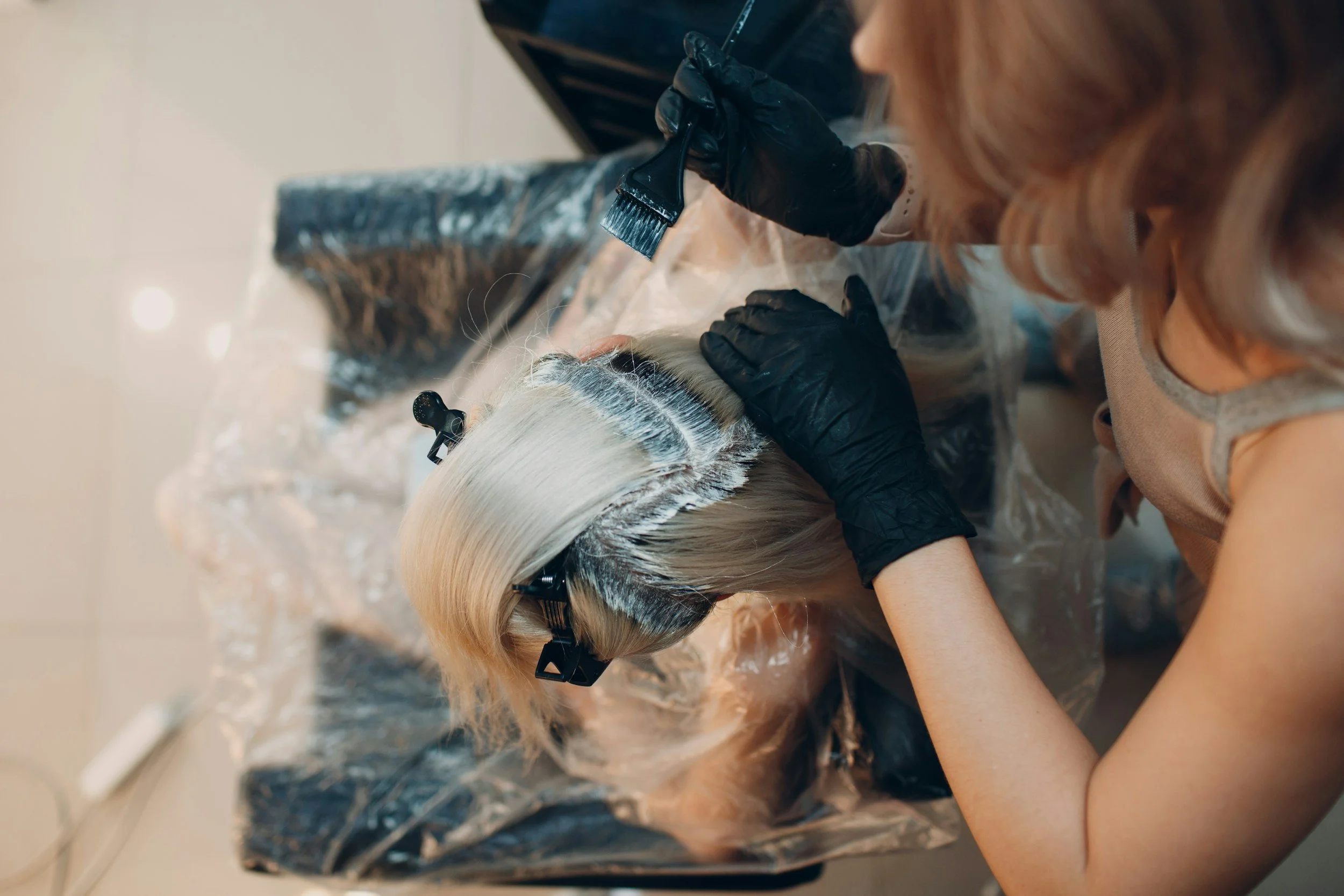
You leave the salon with color that looks seamless. Three weeks later you part your hair in the mirror and there it is. A stripe of your natural shade, or a line of silver, running right along your part. You start counting the days to your next appointment and reaching for a root spray.
Roots will always grow. That is what healthy hair does. But how soon they show, and how harsh that line looks, has far more to do with your color plan than with the speed of your hair.
Your Hair Grows Faster Than You Think
On average, scalp hair grows about half an inch a month. That does not sound like much. But a typical scalp holds around 100,000 hairs, and most of them are growing at any given moment. Added together, your scalp produces well over 100 feet of new hair every single day, and every inch of it arrives in your natural shade.
Within three to four weeks, most people have half an inch or more of regrowth at the part. Whether anyone notices comes down to one thing. Contrast.
Why Some Roots Show More Than Others
Too much contrast. The bigger the gap between your natural shade and your color, the sooner the line appears. Dark brown lifted to pale blonde, or silver covered with a solid dark shade, will always reveal itself quickly.
Flat, solid coverage. Single shade color creates a hard edge where new growth meets old. Dimensional color, with softer tones near the scalp, grows out far more gracefully.
Gray at the hairline and part. Silver often appears first at the temples and part, exactly where you look most often. Our guide to gray hair coverage without chemicals explores the options.
Faded lengths. When your lengths fade or turn brassy, they no longer match the fresh shade near the root, and the whole head looks uneven. Read why your hair color fades faster in winter.
At home touch ups. Box color layered over salon color builds bands of different shades. Each new application makes the line harder to blend. Learn more about why patchy at home color costs you more.
How to Stretch the Time Between Appointments
Ask about a softer root. Keeping a shade closer to your natural tone at the scalp means regrowth blends rather than draws a line.
Blend gray rather than block it. Translucent tones soften silver instead of hiding every strand. As it grows, there is no stark stripe.
Consider balayage or highlights. Hand painted, dimensional color grows out softly and can often be refreshed every few months rather than every few weeks. Discover organic balayage in Alexandria.
Protect the color you have. The OWAY color protection hair bath and mask, lukewarm water and fewer washes keep your lengths matching your roots for longer.
Move your part. Switching sides or softening your part with a zigzag disguises early regrowth on a busy week.
Book ahead. If you prefer full coverage, a Color Retouch every four to six weeks keeps the line from ever appearing. Booking before you leave the salon makes it effortless.
Root Color Without the Harsh Chemicals
Root color is applied directly to the scalp every few weeks, often for years. That makes what is in it matter. Many conventional dyes rely on ammonia, PPD and resorcinol. At Holistic Hair Studio we color with O&M, a low tox, ammonia free color line, so your scalp is not exposed to harsh fumes every time your roots need attention. Read how to get beautiful color without the toxic fumes.
Color Retouch at Holistic Hair Studio
Our Color Retouch refreshes your roots and blends them seamlessly into your lengths. At your consultation we look at your natural shade, your gray pattern and how often you want to visit, then design color that suits your life rather than ruling it. Clients visit our Powhatan Street studio from Old Town, Del Ray and across Alexandria.
Your Root Regrowth Checklist
Expect about half an inch of growth a month
Choose dimensional color over flat, solid shades
Ask about a softer root or gray blending
Protect your lengths with OWAY color protection care
Avoid layering box color over salon color
Book a Color Retouch at Holistic Hair Studio in Alexandria
Book your appointment today and experience the transformative power of natural organic hair wellness at Holistic Hair Studio!
1433 Powhatan Street, Alexandria, VA 22314
Book your appointment: 703-473-6864
You might also like to read these articles:
Gray Hair Coverage Without Chemicals: Alexandria's Natural Color Solution
Why Gray Hair Turns Yellow
Your silver looked bright and clean. Now it has a yellow cast. Here is what turns gray hair yellow and how to keep it luminous with organic care.
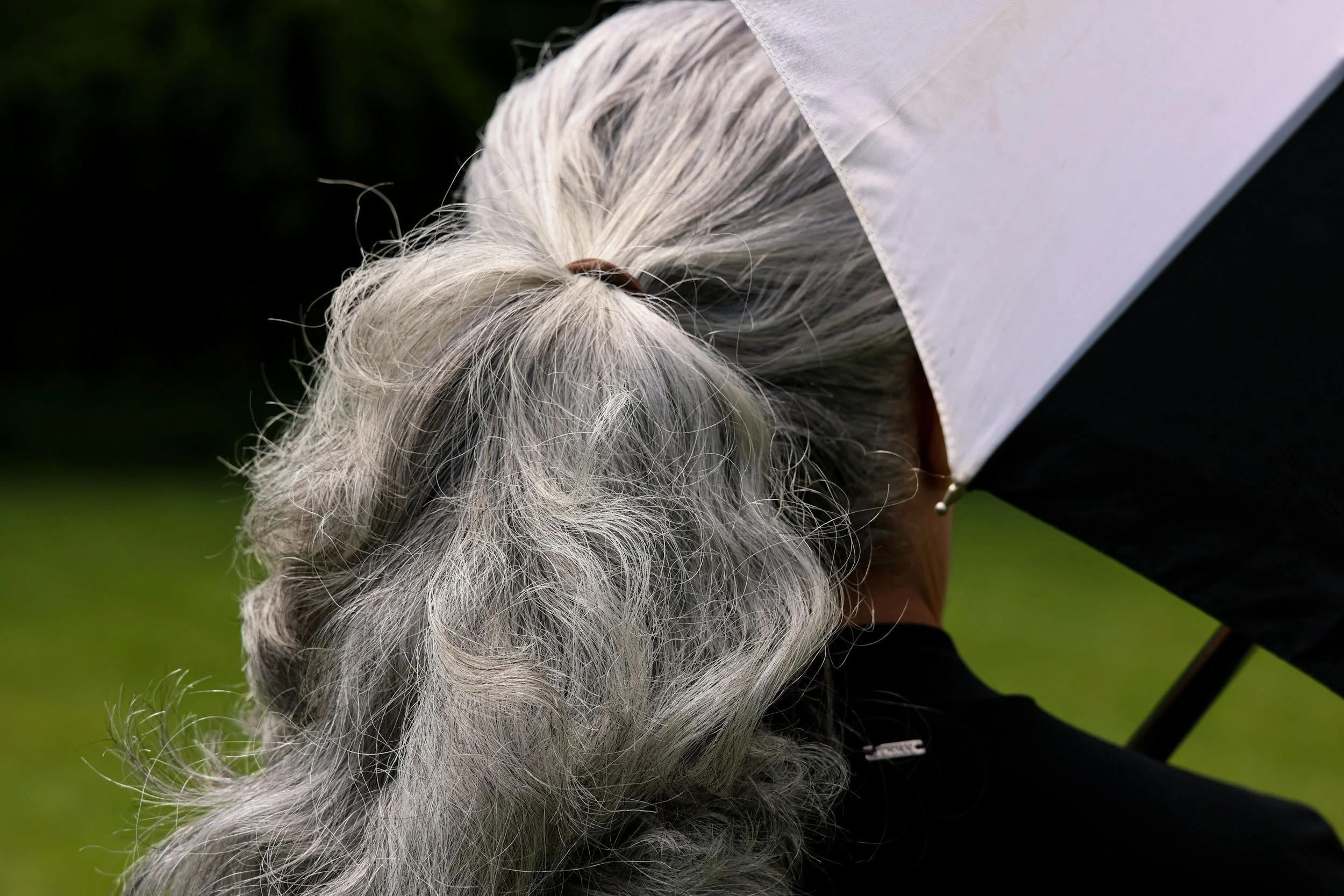
You stopped coloring and let your silver come through. For a while it looked bright, crisp and modern. Now there is a yellow cast you never noticed before. In photos it looks dull. Under the bathroom light it looks almost tea stained. You wonder if this is simply what gray hair does.
It is not. Healthy gray and white hair should look clear and luminous. When it turns yellow, something is either settling on it or breaking it down from within. Both can be corrected, and the correction starts with understanding what gray hair really is.
Gray Hair Is Not Actually Gray
Here is something most people never learn. There is no such thing as a gray hair. A strand that grows in without pigment is translucent. It looks white because of the way it scatters light, and the silver you see across your whole head is the blend of those strands with the pigmented ones around them.
That is why yellowing shows so clearly. A translucent strand has no pigment to disguise anything. Whatever lands on it, or happens inside it, is on display.
What Turns Gray Hair Yellow
Sun. In darker hair, pigment absorbs some ultraviolet light and shields the protein of the strand. Gray hair has no such shield. Ultraviolet light breaks down amino acids in the keratin, and the compounds left behind have a yellow tone.
Heat. Flat irons and curling irons on high settings can scorch the keratin in unpigmented hair and leave a yellow cast that does not wash out. A temperature that leaves darker hair looking fine can mark silver hair after a few passes.
Hard water. Calcium and magnesium in hard water dull the surface of the hair, and trace iron and copper from water and household pipes can tint light hair yellow or even orange over time. Our guide to why Alexandria's hard water ruins hair explains the problem in detail.
Smoke and pollution. Wood smoke, cooking fumes, cigarette smoke and traffic pollution all leave residue on the strand. On pigmented hair you never see it. On silver hair you do.
Product residue. Heavy oils, silicones and some styling products sit on the surface and can oxidize, slowly staining the hair. Read more about why your hair is addicted to silicones.
Why Purple Shampoo Is Not the Whole Answer
Violet pigment cancels yellow, so a purple shampoo can brighten gray hair for a few days. But it covers the problem rather than removing it. Used too often, it can leave silver hair looking lilac or flat, and many conventional versions rely on sulfates and synthetic dyes. Our article on the purple shampoo trap explains why. The lasting solution is to stop yellowing at its source and clear away what has already built up.
How to Keep Gray Hair Bright
Clarify regularly. An OWAY purifying hair bath every week or two lifts mineral and smoke residue without stripping your hair.
Turn the heat down. Keep hot tools on a low to moderate setting and avoid pressing the same section twice. Let a professional blow dry do the heavy work.
Shade it from the sun. A hat or scarf on bright days, especially by the waterfront or on the Mount Vernon Trail in summer, protects silver hair the way sunscreen protects your skin.
Hydrate the cuticle. Gray hair is often drier and coarser than it used to be. A weekly OWAY moisturizing hair mask keeps the surface smooth so it reflects light instead of looking dull. Learn more about why your hair is different after 50.
Finish with shine, not weight. A few drops of OWAY smooth'n glow hair serum polish the surface without heavy residue.
Filter your shower. Reducing the minerals in your shower water protects the brightness you already have.
Luminous Silver at Holistic Hair Studio
Our Toner Service is one of the most effective ways to restore cool, clear silver. A sheer toner neutralizes yellow and adds shine, and because we use O&M, a low tox, ammonia free color line, your scalp is spared harsh fumes. Pair it with a Scalp Purifying Treatment to clear buildup, or a Deep Conditioning treatment with OWAY masks to restore softness. Whether you are growing out your gray or blending it, we will build a routine that keeps it luminous. Clients visit our Powhatan Street studio from Old Town, Del Ray and across Alexandria.
If you are still deciding whether to embrace your gray or cover it, read about gray hair coverage without harsh chemicals.
Your Bright Silver Checklist
Clarify every week or two with an OWAY purifying hair bath
Keep hot tools on a low to moderate setting
Cover up in strong sun
Use a weekly OWAY moisturizing hair mask
Go easy on purple shampoo
Book a Toner Service at Holistic Hair Studio in Alexandria
Book your appointment today and experience the transformative power of natural organic hair wellness at Holistic Hair Studio!
1433 Powhatan Street, Alexandria, VA 22314
Book your appointment: 703-473-6864
You might also like to read these articles:
How Often Should You Get a Haircut?
Every six weeks? Every three months? Only when it looks bad? Here is how often you really need a haircut based on your hair type, length and goals.
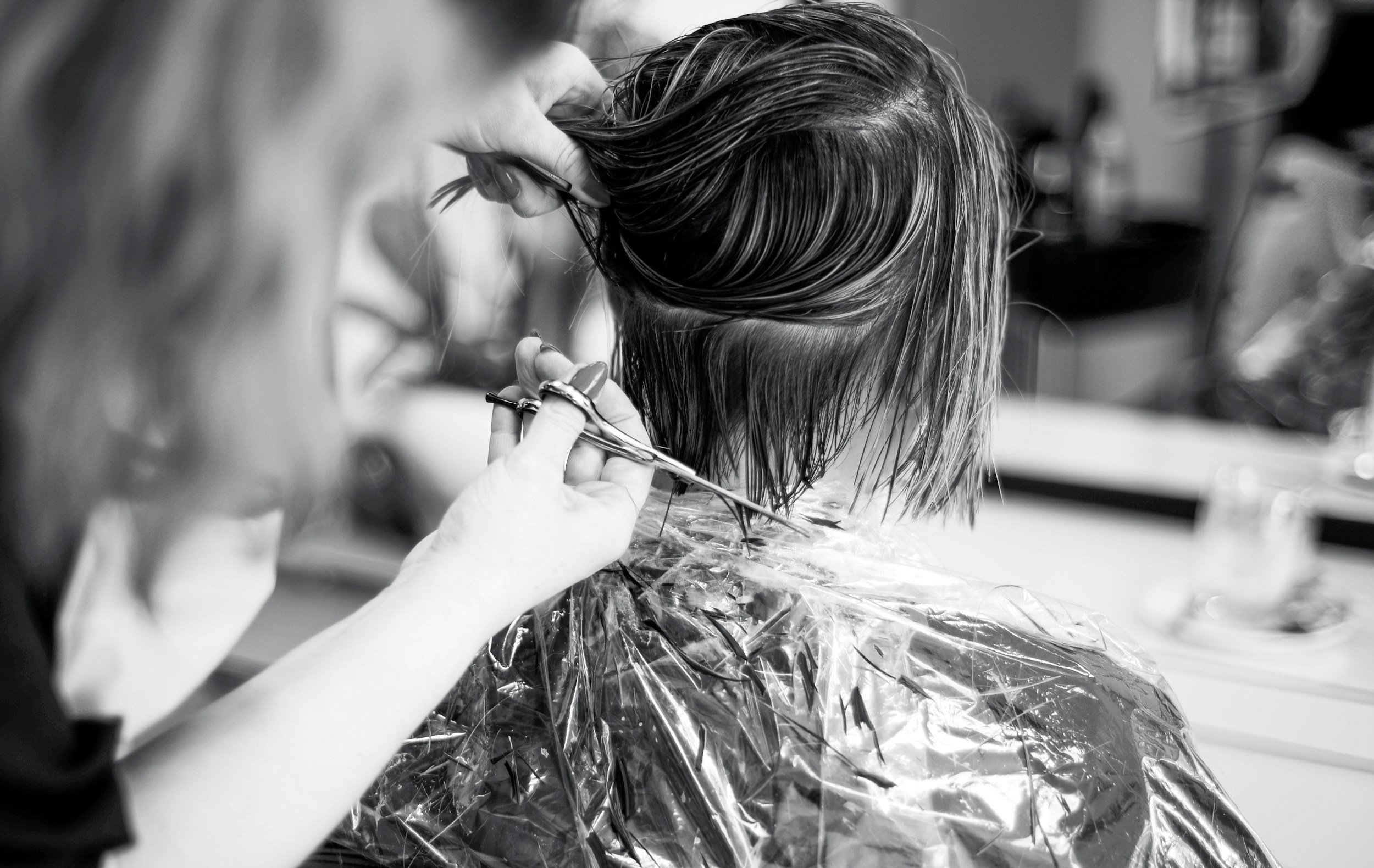
You look in the mirror and wonder if it is time. Your ends look a little thin. Your style has lost its shape. But you are trying to grow it out, so you put it off. Another month goes by.
How often you need a haircut depends on your hair, your style and your goals. There is no single rule for everyone. But there are clear signs that it is time, and a few simple guidelines that will keep your hair healthy whether you are keeping a sharp bob or growing to your waist.
A Simple Guide by Hair Type
Short cuts and pixies. Short styles lose their shape fastest. Most people need a cut every four to six weeks to keep the lines clean.
Bobs and shoulder length. Every six to eight weeks keeps the shape sharp and the ends healthy.
Long hair. Every eight to twelve weeks is usually enough to remove split ends before they travel.
Curly hair. Curls hide uneven ends well, so many curly clients come in every three to four months. Your curl pattern and shape decide the timing.
Growing it out. A small trim every ten to twelve weeks actually helps you keep more length, because it stops splits from working their way up the strand.
Signs You Are Overdue
Your ends look thin or see-through. Healthy hair is just as full at the ends as it is higher up.
Your ends tangle easily. Split, rough ends catch on each other and knot.
Your style will not sit right. If your hair no longer falls the way it did when you left the salon, the shape has grown out.
You see split ends or white dots. Small white dots near the tips are often breakage points. Splits cannot be repaired, only removed.
Your hair feels rough at the bottom. Run your fingers down a section. If the last few inches feel like straw, it is time.
Why Regular Cuts Save Length
It sounds backward, but skipping cuts often costs you more length. A split end does not stay put. It keeps splitting up the strand until the hair breaks. A regular trim removes a small amount of damage. A long gap means cutting off much more to get back to healthy hair. Learn more in our article on the split end cycle.
Making Cuts Last Longer in Alexandria
Alexandria's hard water and dry winter air both speed up damage at the ends. To stretch the time between cuts:
Use a gentle, sulfate free OWAY hair bath
Add a weekly OWAY mask
Seal ends with a few drops of OWAY smooth'n glow hair serum
Keep heat tools on a moderate setting
Detangle from the ends up with a wide tooth comb
Haircuts at Holistic Hair Studio
Every haircut at our Powhatan Street studio includes a consultation, an OWAY shampoo, a precision cut and a style. We offer short, medium and long cuts, a dry Curly Cut for natural curls, buzz cuts and children's cuts. At your appointment we will tell you exactly how often your hair needs to come back in, so you can book ahead and never wait too long. Clients visit us from Old Town, Del Ray and across Alexandria.
For more on keeping your ends healthy, read our complete guide to hair damage repair.
Your Haircut Timing Checklist
Short styles: every four to six weeks
Bobs and shoulder length: every six to eight weeks
Long hair: every eight to twelve weeks
Curly hair: every three to four months
Growing out: a small trim every ten to twelve weeks
Book your next cut before you leave the salon
Book your appointment today and experience the transformative power of natural organic hair wellness at Holistic Hair Studio!
1433 Powhatan Street, Alexandria, VA 22314
Book your appointment: 703-473-6864
You might also like to read these articles:
The Split End Cycle: Why Your Hair Keeps Breaking and How OWAY Seals the Damage
What Does a Hair Toner Do?
Your blonde looks yellow. Your brunette looks orange. A toner can often fix that in one short visit. Here is what toner does, how long it lasts and how to keep your color fresh.
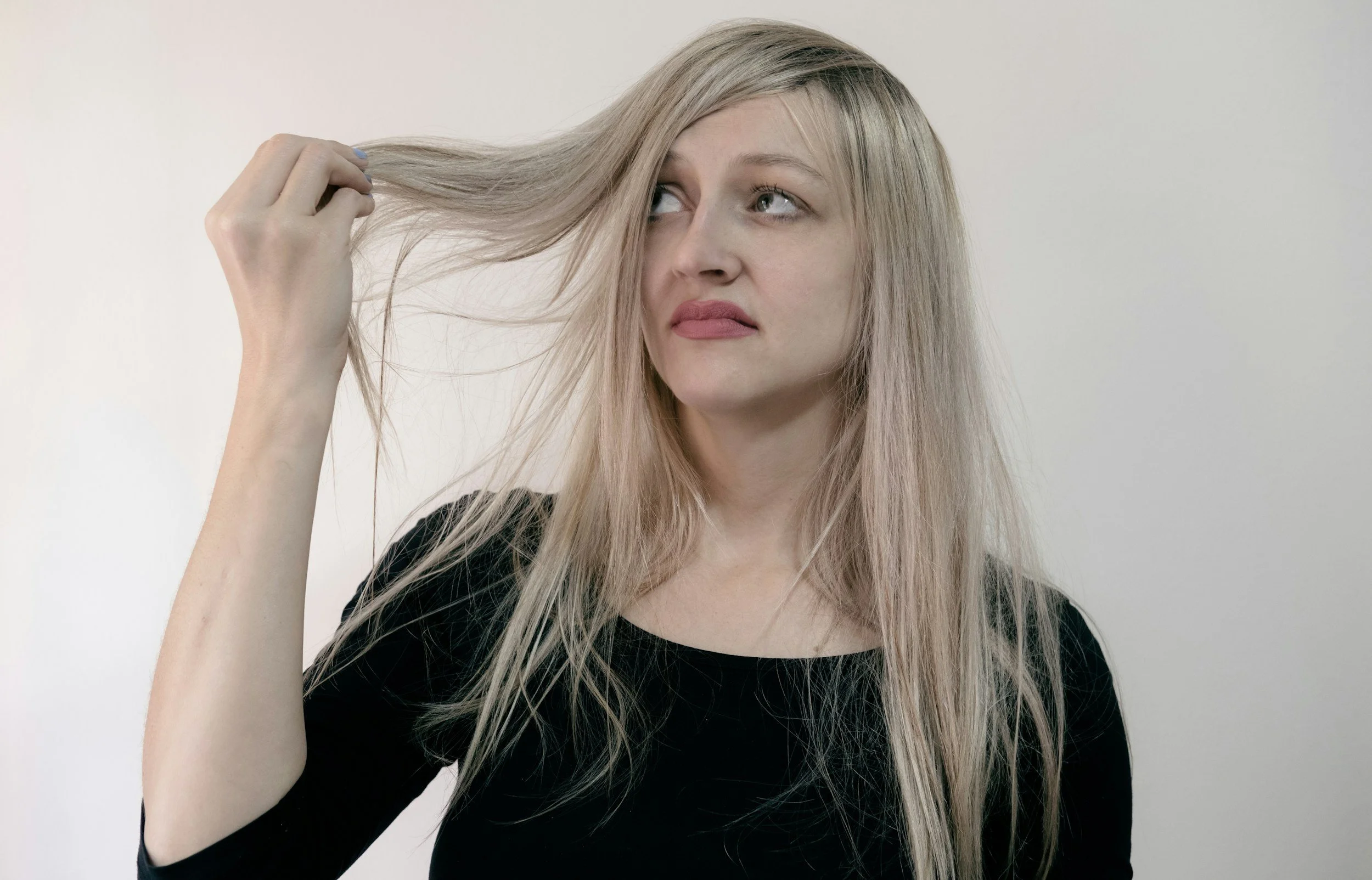
You loved your color when you left the salon. A few weeks later your blonde looks yellow. Your highlights look brassy. Your brunette has an orange glow you never asked for. You wonder if you need to color it all over again.
You probably do not. You may just need a toner. A toner is one of the quickest, gentlest ways to bring tired color back to life, and it is one of the most misunderstood services in the salon.
What a Toner Actually Does
A toner adjusts the tone of your hair, not the lightness. It does not lighten your hair or cover gray. Instead, it uses color theory to cancel out warmth you do not want.
Violet cancels yellow. A violet based toner turns yellow blonde into a cooler, brighter or creamier blonde.
Blue cancels orange. A blue based toner calms orange and copper tones in brunette and dark blonde hair.
Toners can add warmth too. If your color looks flat or ashy, a toner can add golden or caramel tones instead.
Toner also adds shine, which is why hair often looks glossier straight after.
Why Color Turns Brassy
When hair is lightened, its natural warm pigments are exposed. Over time, the cooler tones in your color fade first and the warm ones show through. Sun, hot water and frequent washing speed this up.
In Alexandria, hard water adds to the problem. Minerals in the water build up on your hair and can push your tone warmer and duller. Our article on why Alexandria hair turns brassy between salon visits explains this in more detail.
How Long Does a Toner Last?
Toner is a gentle, short term service. Most toners last around four to six weeks, depending on how often you wash, your water and how porous your hair is. Many clients book a toner between full color or highlight appointments to keep their shade fresh.
Who Needs a Toner?
Blondes whose color has turned yellow or brassy
Clients with highlights or balayage that has lost its brightness
Brunettes noticing orange or red undertones
Anyone who wants more shine between color appointments
How to Make Your Toner Last
Wash with cool or lukewarm water
Wash less often, every two to three days if you can
Use sulfate free, color safe care such as the OWAY color protection hair bath and mask
Clear hard water buildup with an OWAY purifying hair bath every week or two
Protect your hair from strong sun
Toner Service at Holistic Hair Studio
Our Toner Service removes brassiness and restores shine between color services or after blonding. You can book it on its own or with a professional blow dry and style. We use O&M, a low-tox, ammonia free color line, so your hair gets fresh tone without the harsh fumes. Clients visit our studio on Powhatan Street from Old Town, Del Ray and across Alexandria.
If your color fades faster in the colder months, read why your hair color fades faster in winter.
Your Toner Checklist
Toner corrects tone, not lightness
Violet cancels yellow, blue cancels orange
Expect around four to six weeks of fresh tone
Use cool water and color safe care at home
Book a Toner Service at Holistic Hair Studio in Alexandria
Book your appointment today and experience the transformative power of natural organic hair wellness at Holistic Hair Studio!
1433 Powhatan Street, Alexandria, VA 22314
Book your appointment: 703-473-6864
You might also like to read these articles:
Why Your Highlights Look Brassy After Two Weeks
Holiday Party Hair in Alexandria: Your Prep Timeline
Office parties, family photos and dinners in Old Town are coming. Here is a simple week by week timeline to get your hair glossy, healthy and ready for every holiday plan.

The invitations are arriving. The office party. Dinner with friends in Old Town. Family photos. New Year's Eve. You want your hair to look its best for every one of them. Then you check the salon calendar and realize everyone else had the same idea.
The holidays are the busiest season of the year for salons. The best way to get great holiday hair is to plan backward from your first big event. Here is a simple timeline that works.
Six to Eight Weeks Before: Book Everything
December appointments fill up fast. Book your cut, color and any treatments now, before the calendar fills. If you have a specific event, tell us the date when you book so we can plan the timing.
Four Weeks Before: Repair and Strengthen
Cold, dry air and indoor heating start drying hair out in November. Start a weekly OWAY mask at home and book a Deep Conditioning treatment if your hair feels rough. Healthy hair holds color, shine and style far better than dry hair.
Two to Three Weeks Before: Color
Book any color service two to three weeks before your first event. Color looks its best once it has had a few washes to settle, and this gives time for any small adjustments. We use O&M, a low-tox, ammonia free color line, for rich color without harsh fumes.
One to Two Weeks Before: Cut
A cut one to two weeks ahead lets the shape relax and grow in naturally. Cutting the day before leaves no time to get used to a new look.
The Week Of: Toner and Gloss
If your blonde or highlights have turned brassy, a Toner Service a few days before your event brings back brightness and shine. Read more in our guide to what a hair toner does.
The Day Of: Style
A professional blow dry gives you smooth, glossy hair that lasts. If you are styling at home, start with clean hair, use a heat protectant and finish with a few drops of OWAY smooth'n glow hair serum for shine without weight.
Keep Your Hair Looking Good All Season
Wash with lukewarm water and finish with a cool rinse
Use sulfate free, color safe OWAY care
Sleep on a silk or satin pillowcase to reduce frizz and friction
Keep heat tools on a moderate setting
Clear hard water buildup with an OWAY purifying hair bath
If your color tends to fade in the cold, read why your hair color fades faster in winter.
Holiday Hair at Holistic Hair Studio
From quick toners to full color and cuts, our Powhatan Street studio helps clients from Old Town, Del Ray and across Alexandria look their best through the holidays. Book early, tell us your event dates and we will plan your appointments around them.
Your Holiday Hair Timeline
Six to eight weeks before: book everything
Four weeks before: repair and condition
Two to three weeks before: color
One to two weeks before: cut
The week of: toner
The day of: professional blow dry
Book your appointment today and experience the transformative power of natural organic hair wellness at Holistic Hair Studio!
1433 Powhatan Street, Alexandria, VA 22314
Book your appointment: 703-473-6864
You might also like to read these articles: